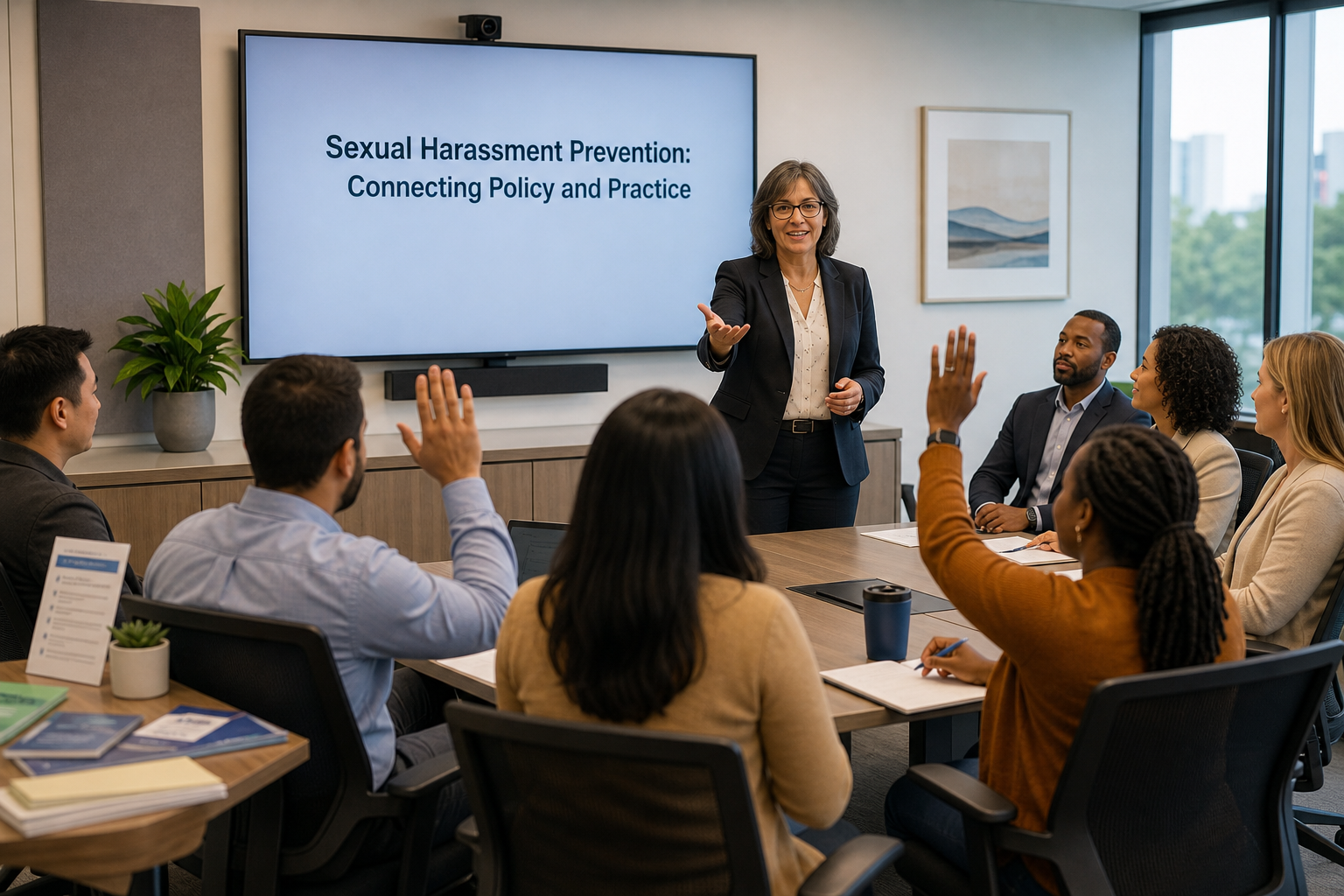
The Holt Group’s Risk Insights article brings several practical pieces of sexual harassment prevention into view: clear expectations, ways to raise concerns, and a consistent leadership response. Looking at those pieces together offers a useful question for business leaders: how well are they connected in everyday practice?
A policy gives team members a reference point. Training helps explain what that policy means. The response when someone raises a concern is where those expectations become visible.
Federal Law Is the Starting Point
Title VII establishes an important federal foundation for addressing sexual harassment. State and local laws may add responsibilities, including different coverage thresholds and policy or training requirements.
For an organization with multiple work locations or remote team members, the discussion extends beyond its headquarters. Understanding which requirements apply where people work is part of connecting compliance with a practical prevention system.
Explore the Full Risk Insights Article
If you’d like a closer look, the full Sexual Harassment article explores the federal foundation, examples across The Holt Group service area, and the practical elements of a consistent prevention system.
It includes guidance on training, reporting concerns, leadership response, and follow-up, along with a prevention checklist and source references.
A Prevention System That Works Together
The value of prevention reaches beyond an annual training session. Policy, reporting, documentation, appropriate investigation, and protection against retaliation each have a role in helping team members know what to expect.
How does your organization connect those responsibilities, and what happens after a concern is raised? The full article offers a starting point for that conversation, with room to consider the requirements and circumstances specific to your business.
The Holt Group | Here to Help
This article is for general informational purposes and is not legal advice. Legal requirements can change. Consult qualified legal counsel about the federal, state, and local requirements that apply to your organization.