REGULATORY UPDATE
Working Together. Evolving Together.
OSHA | REGULATORY COMPLIANCE
Battery Charging and Storage
| Applicable Standard |
Who It Applies To |
What Changed |
| 29 CFR 1910.178(g) |
General Industry operations changing or charging batteries on powered industrial trucks |
Designated charging areas, ventilation, electrolyte response, fire protection, and safe handling |
What OSHA Requires
OSHA does not rely on one universal “battery storage” rule for every workplace or battery chemistry. Requirements depend on the operation. For many facilities using electric powered industrial trucks, 29 CFR 1910.178(g) governs changing and charging storage batteries. Construction operations have separate battery provisions in 29 CFR 1926.441. Employers should identify which standards apply to their work and battery systems.
What It Means for Your Business
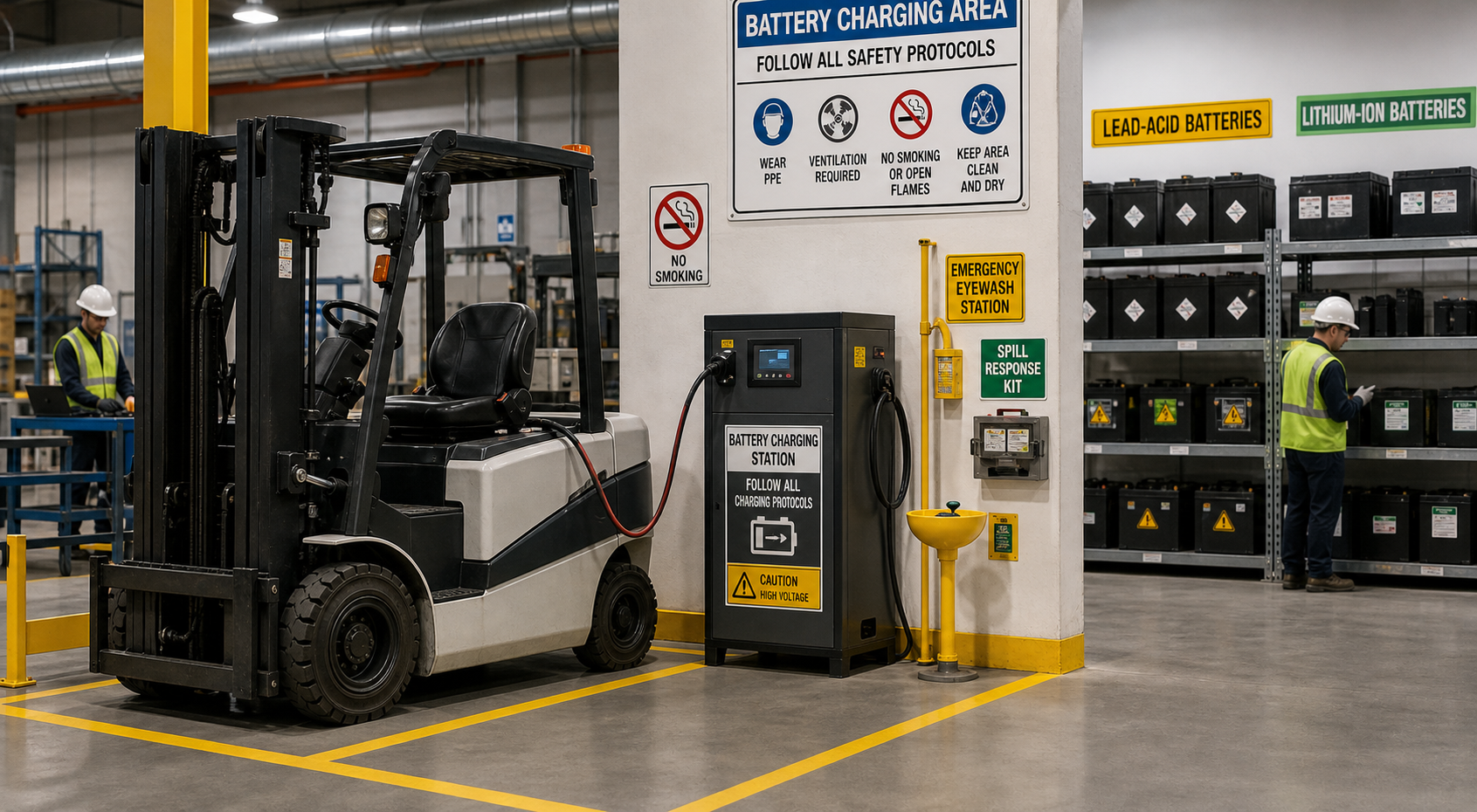
Battery safety is more than choosing a storage room. A compliant program should address where batteries are charged or changed, ventilation, electrolyte spills, fire protection, ignition sources, safe handling, PPE and emergency flushing. The hazards also differ by battery chemistry: lead-acid batteries can expose team members to corrosive electrolyte and hydrogen gas, while lithium-ion batteries can present thermal-runaway, fire, explosion and chemical-exposure hazards.
What to Consider
- Are battery charging and changing activities performed only in designated areas?
- Does the area have ventilation appropriate for the batteries and charging process, along with controls for sparks, flames and smoking?
- Are spill response, fire protection, PPE and emergency eyewash/body-flushing arrangements appropriate for the hazards present?
- Has the organization evaluated lithium-ion batteries separately for damage, temperature, charging, storage and thermal-runaway risks?
Practical Guidance
General Industry: Powered Industrial Truck Batteries
For many operations using electric forklifts or other powered industrial trucks, OSHA 29 CFR 1910.178(g) contains specific requirements for changing and charging storage batteries.
- Locate battery charging installations in areas designated for that purpose.
- Provide facilities for flushing and neutralizing spilled electrolyte, fire protection, protection of charging apparatus from truck damage, and adequate ventilation for dispersal of fumes from gassing batteries.
- Use appropriate battery-handling equipment when batteries are changed, and properly position and secure reinstalled batteries.
- Keep vent caps functioning during charging and open the battery or compartment covers when needed to dissipate heat.
- Prohibit smoking and take precautions to prevent open flames, sparks and electric arcs in battery charging areas; keep tools and other metallic objects away from uncovered batteries.
Lead-Acid: PPE, Eyewash and Electrolyte
Lead-acid battery work can expose team members to corrosive electrolyte and gases generated during charging. OSHA’s requirements may come from several standards depending on the task. PPE must be selected based on the hazard assessment, and where corrosive materials may contact the eyes or body, suitable facilities for quick drenching or flushing must be available for immediate emergency use.
- Evaluate face, eye, hand and body protection for electrolyte handling and battery servicing.
- Provide a practical method to flush and neutralize spilled electrolyte and keep response materials accessible.
- Confirm emergency eyewash/body-flushing equipment is located for immediate use based on the actual exposure hazard.
- Train affected team members on charging, handling, spill response, PPE and emergency procedures.
Important Distinction: General Industry vs. Construction
OSHA requirements vary by setting. General industry powered-industrial-truck battery charging is addressed by 29 CFR 1910.178(g), while construction battery work is addressed by 29 CFR 1926.441. The construction standard includes a specific 25-foot quick-drenching requirement; general industry relies on applicable standards including 29 CFR 1910.151(c), which requires suitable flushing facilities for immediate emergency use where corrosives may contact the eyes or body.
Lithium-Ion Batteries: An Emerging Focus
OSHA’s 2025 lithium-ion battery safety guidance emphasizes that these batteries can create hazards beyond traditional lead-acid charging concerns. Thermal runaway can result from internal short circuits, physical damage, temperature extremes or improper charging and may produce fire, explosion and hazardous gases or particulates.
Store lithium-ion batteries in cool, dry locations and follow manufacturer instructions for charging, use, inspection and storage.
- Protect batteries from physical damage and temperature extremes, and establish a process for identifying and isolating damaged, swollen, overheating, smoking or otherwise abnormal batteries.
- Consider ventilation and monitoring where flammable or toxic gases could be released, particularly in areas with significant battery quantities or charging activity.
- Plan emergency response before an event occurs. Team members should know how to recognize warning signs and when to evacuate rather than attempt to handle an unstable battery.
- Use appropriate recycling or disposal channels and incorporate battery hazards into the organization’s broader safety and health management system.
The Holt Group Perspective
Battery safety is a system, not simply a room.
A strong program connects the battery chemistry and equipment being used with designated charging areas, ventilation, PPE, emergency equipment, inspection, maintenance, training and response planning. As battery technology changes, the organization should periodically reassess whether its controls still match the hazards present.
OSHA sources reviewed: 29 CFR 1910.178(g); 29 CFR 1926.441; OSHA Lithium-ion Battery Safety Fact Sheet (2025); OSHA Powered Industrial Trucks and Warehousing guidance. Reviewed October 2026.
COMPLIANCE | RISK PREVENTION | RISK FINANCE | COMMUNICATION
Protect Team Members. Control Risk. Control the Cost of Risk.
THE HOLT GROUP LLC | www.theholtgroupllc.com
This Regulatory Update is not intended to be exhaustive, nor should any discussion or opinions be construed as legal advice. Readers should contact legal counsel for appropriate advice. © Zywave, Inc., The Holt Group LLC All rights reserved. All images are from Google Images and Story Blocks. Revised 2027
.png?width=626&height=160&name=image%20(6).png)