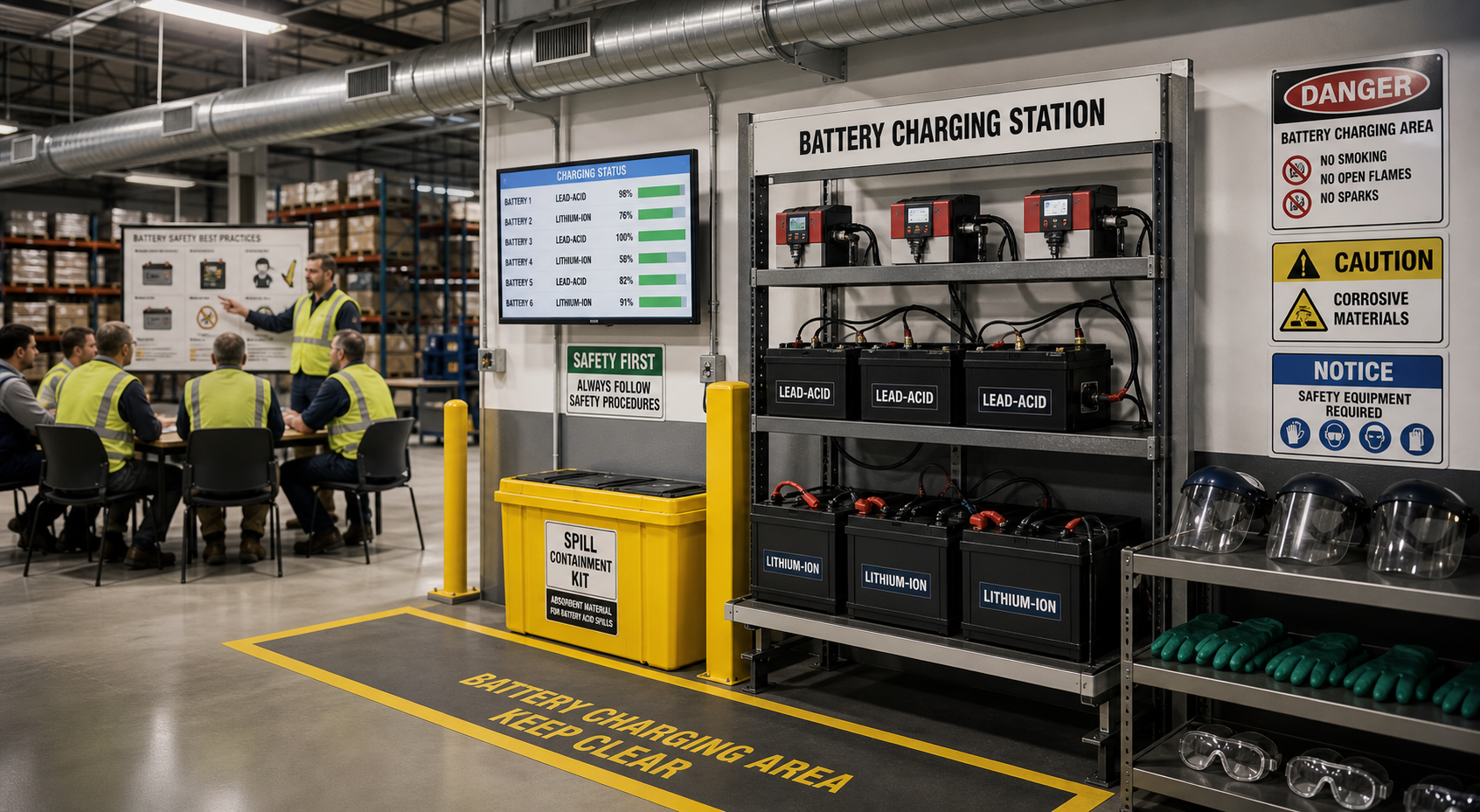
A review of a battery charging area brings several practical details into view: the equipment in use, the ventilation provided, and the protective equipment available. Looking at those details together raises a worthwhile question: do your controls match the batteries your team members handle?
The Holt Group’s battery safety guide explores how workplace setting and battery chemistry shape that answer. Lead-acid batteries can present corrosive electrolyte and hydrogen-gas hazards, while lithium-ion batteries call for attention to damage, temperature, charging practices, and thermal-runaway risks.
A designated storage or charging area is one part of the picture. Inspection, training, emergency equipment, and response planning also have a role. As equipment and battery systems evolve, periodic review can help keep those practices aligned with the hazards present.
Key Takeaways from the Insight
- Identify applicable requirements: Review your operations and battery systems. General industry and construction have different provisions; one universal battery-storage rule does not cover every workplace.
- Connect charging-area controls: Review designated charging locations, appropriate ventilation, fire protection, and precautions against smoking, sparks, flames, and equipment damage.
- Prepare for lead-acid exposures: Match PPE to the hazard assessment, keep electrolyte-response materials accessible, and provide suitable emergency flushing where corrosive exposure is possible.
- Plan for lithium-ion warning signs: Follow manufacturer instructions and train team members to recognize damage, swelling, or overheating and when to evacuate rather than handle an unstable battery.
Explore the Full OSHA Battery Safety Guide
If you’d like a closer look, the full Guide to OSHA Battery Safety explores charging and storage practices, lead-acid protections, and lithium-ion considerations.
It includes distinctions between general industry and construction requirements, practical review questions, and guidance on ventilation, PPE, emergency flushing, training, and response planning.
About The Holt Group
The Holt Group helps business leaders protect their organizations and team members through practical risk management planning and implementation. Our purpose is to help people build stronger businesses by connecting the decisions, systems, and relationships that influence risk.
Through Risk Management University, we bring leadership, compliance, risk prevention, risk finance, and insurance together as an integrated system. Safety and compliance training, claims guidance, and risk management resources help business partners put that approach into everyday practice.
Contact us to explore how an integrated risk management approach could support your business.
This article is for general informational purposes and is not legal advice. Consult qualified safety and legal professionals about the requirements that apply to your organization.